
Speech By Dr.A.P.J.Abdul Kalam at NCAR 2010

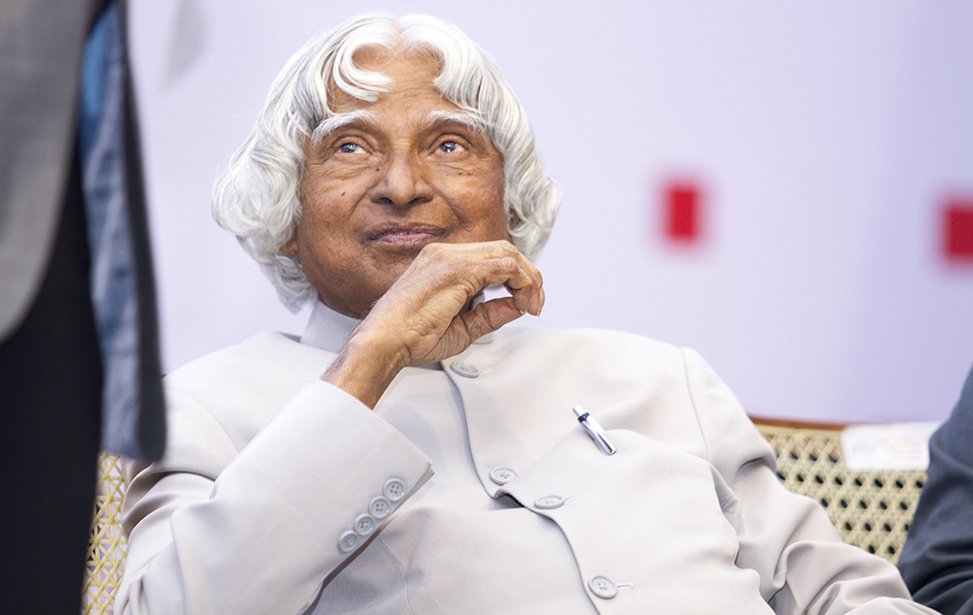
Former President Dr. A.P.J Abdul Kalam

I am delighted to inaugurate the National Convention for Academics and Research – 2010 on “Computing Freedom for Technology, Education and Research” being organized by the Free Software Movement of India (FSMI) at IIIT, Hyderabad. I am happy to know that this First NCAR 2010 is being organized for spreading awareness of Free/Libre and Open Source Software (FOSS/FLOSS), and provide a platform for sharing of experiences and views in its use in Academia/Research Communities and to Foster a collaborate approach to education in developing and improving educational aids including software tools.

I am happy that the convention is focusing on wide range of topics through dedicated track sessions on academic and research areas like scientific computing and visualization, embedded technologies, Networking and Security, Cloud computing, to Indian Language technologies and application specific domains of Mobile, GIS...

Read More...

SFD Program In Kerala

Place
	Date
		Details

Quilon
 
   Sept  17

SFD meet with Free Software

Workshop at ITI Chandanathoppu

Embrace open source philosophy, Kalam tells scientists, researchers

The concept of Free Software, wherein knowledge is created by the community for the community, without being driven by commercial interests, must be extended to research to solve problems in health care, agriculture, energy and safe drinking water, the former President A.P.J. Abdul Kalam, said.

He was speaking at the inauguration of the three-day National Convention for Academics and Research on ‘Computing freedom for technology, education and research,' organised by the Free Software Movement of India (FSMI), a national coalition of regional free software movements, on the Mahindra Satyam campus here on Thursday.

Mr. Kalam implored scientists, researchers and academics to embrace the ‘open source philosophy' in their respective fields, and work towards building ‘open source networks' that can help pool talent, research and know-how from around the world. Such a platform can help evolve scientific solutions to problems, particularly those relevant to developing countries.

“Why don't Free Software movements come together to create a network of experts to work on providing free drinking water,” he asked the audience.

A valuable open source movement initiated in the Indian health care sector is the Open Source Drug Discovery (OSDD), a consortium led by the Council of Scientific and Industrial Research.

FSMI on Open Standards in eGovernance

Free Software Movement of India congratulates the FOSS community of India on its victory in acheiving an Open Standards Policy by the Government of India. The continuous debate on the draft policy and vigilant persuasion by the community has finally paid off.

The community should now focus on sensitizing the various government departments and organisations towards compliance to these standards and implementing alternative solutions. We should extend support upto the local government bodies in identifying non-compliant solutions and deploying solutions as per the Open Standards Policy.

We should look forward to foster an environment where the country's technology graduates can be employed for engineering free alternatives in the light of the great demand for solutions that this change in policy will bring forward.

This policy should be showcased as not only a success story of a vibrant Free Software community but also as a benchmark for other government departments in our country and for other countries as well.

FSMI was quoted by The Hindu in this article as:

Workshop for Academicians at BVSR Engg College

Venue: 

BVSR Engineering College, Chimakurthy, Prakasam Dist.

Event Date: 

18th Nov 2010

BVSR Engineering College, Chimakurthy (Prakasam Dist.), will be organzing a one day workshop on "Computing Freedom in Engineering Education – A Free Software Perspective" in association with Swecha. The workshop aims at sensitizing academicians and Post Graduate students about Free Software and the research opportunities in the domain of Free Software. It will show a path for the researchers to think innovatively and to collaborate for the demand for indigenious research in FOSS (Free/Open Source Software).

Topics Covered by the Workshop:

Workshop for Academicians at KKR&KSR Guntur

Venue: 

KKR & KSR Institute of Technology & Sciences, Guntur

Event Date: 

19th Nov 2010

KKR & KSR Institute of Technology and Sciences, Guntur, will be organzing a one day workshop on "Computing Freedom in Engineering Education – A Free Software Perspective" in association with Swecha. The workshop aims at sensitizing academicians and Post Graduate students about Free Software and the research opportunities in the domain of Free Software. It will show a path for the researchers to think innovatively and to collaborate for the demand for indigenious research in FOSS (Free/Open Source Software).

Topics Covered by the Workshop:

Freedom Matters with Eben(Inauguration of Free-Software Course@St.Josephs')

Freedom Matters with Eben Prof.Eben Moglen, Founder, Director-Counsel and Chairman of Software Freedom Law Center, and also the architect of GPL v3 is in Bangalore doing a series of talks and interactions pertaining to the freedom in the digital world.

Computing Freedom in Engineering and Technology Seminar

A one day seminar on 'Computing Freedom in Engineering and Technology' was held in the UGC Staff college auditorium on the 26th of September 2010. This event is in sequel to the call given by Free Software Movement of India (FSMI) to celebrate Software Freedom Fortnight from 15th Sept (birth anniversary of the father of Indian Engineering, Mokshagundam Visweswarayya) to 2nd Oct (Gandhi Jayanthi).

The 'Computing Freedom' seminar was aimed at emphasising on how Free Software can be used in academics and the speakers stressed on the need to strengthen the learning process which could be done only through Free Software as it is possible to look at the source code and make modifications to it. Collaborative effort of the academicians resulted in the release of a lab manual for Qucs (Electronic Circuit Analysis based on Free Software).

The manual was electronically and physically released by Prof KS Rajan of IIITH. It was decided to hold workshops/seminars/symposiums/guest talks in the run up for the National Conference of Academicians in Free Software. To begin with the first workshop will be held in the third week of october in the vicinity of JNTU Kakinada.

Overwhelming response to the Software Freedom Fortnight Celebrations by Swecha

More than 500 students from various colleges in Hyderabad participated in the Free Software workshops held by Swecha. These workshops were held at VNR VJIET, SVIT and SMEC colleges in Hyderabad. The workshops are a sequel to the call given by the Free Software Movement of India (FSMI) to celebrate the Software Freedom Fortnight from the 15th of September (birth anniversary of the father of Indian Engineering, Mokshagundam Visweswarayya) to 2nd October (Gandhi Jayanthi).

Sessions were aimed at introducing various free software alternatives available for the students in the engineering domain. A number of students showed interest in participating in more such workshops. The students were greatly inspired by these workshops to intensify their glug activities in close to 25 engineering colleges with the help of Swecha. The hosting glugs are vglug, EERF and vinx.

Free Software Movement has arrived on the National Scene !

The founding conference of Free Software Movement (FSM) was held at Bengaluru on March 20-21, 2010 which marked a historic development in Free Software Movement in India. Sixteen Free Software Movements (FSMs) working in various states and sectors came together and decided to form a National coalition of FSMs in this two-day National conference.

The conference was attended by 286 delegates from all over the country. The total participants in the conference, including the delegates is 1826. This is the highest number of participation in a free software event in the country. Eighteen parallel sessions have been conducted that dealt with policy issues, free software models and more.

After extensive debate, the conference adopted a document describing the aims and objectives of the organisation, the scope of activities and structure of the organisation. The conference unanimously elected a General Council of 69 members, an Executive Committee of 28 members and 9 office bearers to finalise constitution, other formalities and for the functioning of the organisation.

The office bearers are
 
President
Joseph Thomas

General Secretary
Kiran Chandra

Vice Presidents
Prof Gopinath, IISc,
Prof. Debesh Das
Prabir Purkhayastha

Secretaries
Jay Kumar
Dr. Nandini Mukherjee
Siddartha

Treasurer
Pratap Reddy

Syndicate content